The Art of Imitation: Transforming Android into iOS 26’s Liquid Glass Aesthetic
In June, Apple unveiled its latest design innovation for iOS 26, tagged as Liquid Glass. The reception was decidedly mixed; while some users celebrated the fresh, translucent icons and captivating light refraction effects, others, including Robert Triggs from Android Authority, termed it an “accessibility nightmare.” Despite the divided opinions, a wave of Android enthusiasts has sprung into action, attempting to mimic the sleek look of iOS 26 on their devices. With the wide-ranging customization features that Android offers, as well as the freedom to opt for alternative launchers, converting your Android into an iOS-lookalike is within reach.
Is Your Android Ready for a Makeover?
Are you yearning for the sophisticated aesthetics of iOS on your Android device? The most straightforward method to achieve an Apple-esque appearance is by utilizing a custom launcher. This simple tool allows you to radically transform your user interface with little effort. Numerous iOS-themed launchers are available for free, with many being updated for the latest iOS beta version.
For instance, I opted for the Launcher iOS 26, a widely favored and free launcher that boasts over 10 million downloads. With just a few taps, I revamped the appearance of my Honor 400 Pro. To set a launcher as your default interface across your device, navigate to Settings > Default apps > Home app, and then select your desired launcher. The procedure might vary slightly depending on your Android version, but it generally follows the same pattern.
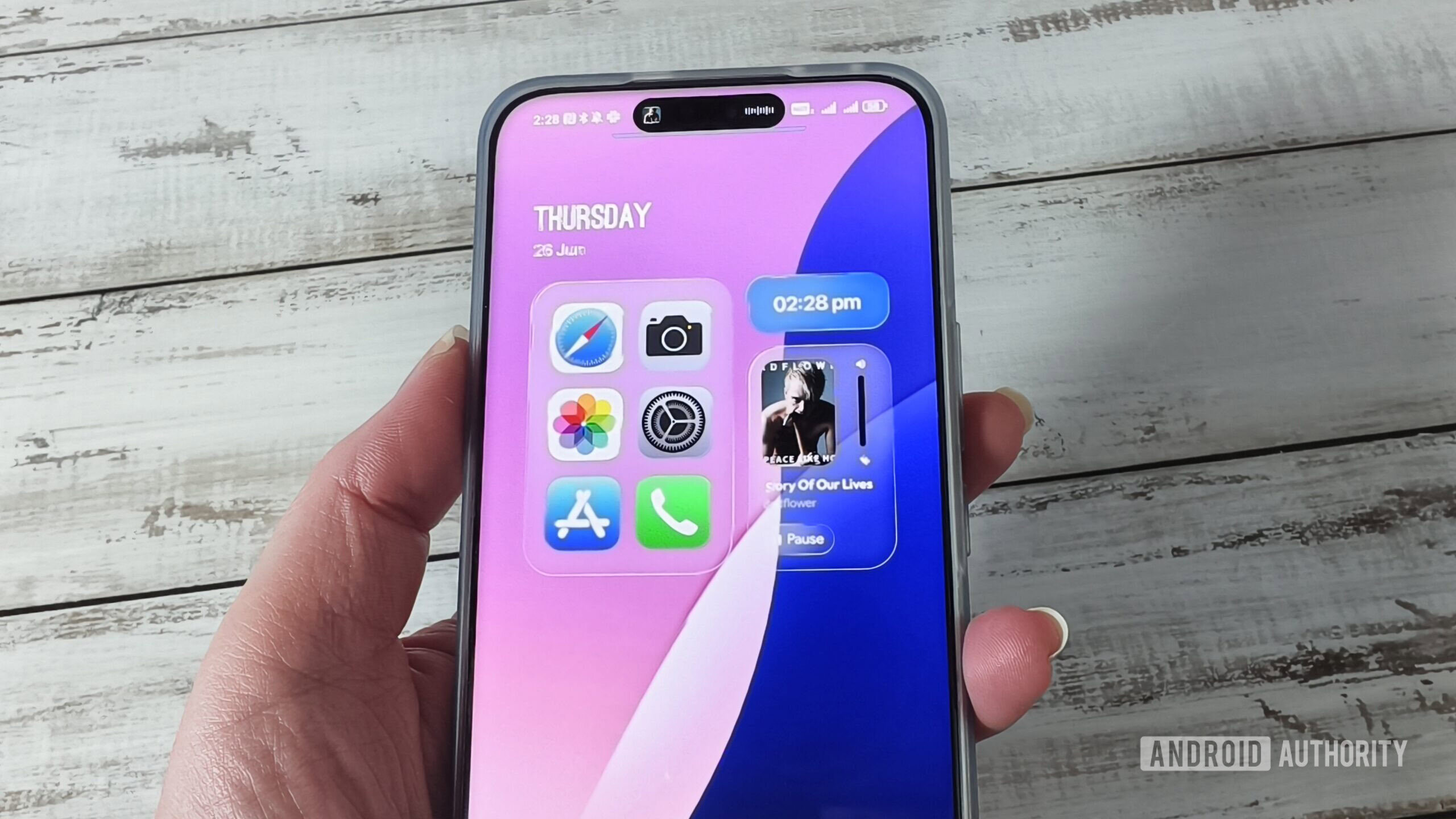
Upon installing Launcher iOS 26, my wallpaper and app icons were instantly updated. Furthermore, it organized my apps into folder-like widgets that appeared seamlessly when I swiped right or left from my home screen. For even more personalization, you can tweak various settings within the launcher app.
To further replicate the iOS experience, I supplemented my setup with a Control Center app, which simulates an iOS-like control panel. However, this does not replace your phone’s built-in control center. The result is a delightful fusion of Android functionality and the elegance of iOS.
Crafting the Liquid Glass Look on Android
While a custom launcher is a fast track to achieving an iOS 26 appearance, many available options may lack the distinctive transparent aesthetics that characterize Liquid Glass. If you’re primarily seeking to incorporate Liquid Glass-inspired widgets, consider investing in a widget pack like iOS Glass KWGT 26 Inspired. This $0.99 pack works in tandem with the KWGT Kustom Widget Pro, which can be purchased for an additional $5.99.
To get started, install a KWGT widget on your home screen. Click on it to add a template from your iOS Glass pack. You’ll find a variety of widgets to choose from, but I selected one that featured app icons, my music player, and timestamps. After customizing it to my liking, I saved the template to ensure it applied to the KWGT widget.
By merging Launcher iOS 26 with the glass widgets pack, I managed to capture the essence of the transparent widgets from iOS 26, all while maintaining the Apple-like interface provided by the launcher. However, I encountered difficulties when attempting to apply transparent app icons using different icon packs that didn’t match the Play Store previews.
Key Considerations While Mimicking the Liquid Glass UI
While the pursuit of a Liquid Glass-inspired interface on Android is exciting, it’s essential to acknowledge potential limitations. The Launcher iOS 26 comes with an abundance of ads, requiring users to view an ad for almost every adjustment they wish to make. The various packs I experimented with either demanded the use of a particular launcher or a widget tool, creating hurdles that may hinder your desired outcome.
If achieving an iOS 26 aesthetic is your goal, be prepared for some frustrations. None of the methods I explored could effectively replicate the enchanting light refraction effects that so many adore in Liquid Glass. Moreover, I found that the actual results of icon packs did not reflect the appealing screenshots, which led to either uninstallation or requests for refunds. Be vigilant; you may end up with a subpar imitation that fails to deliver the elegance you seek.
As for me, while my heart lies firmly with Android, I do wish it could adopt some accessibility features from iOS. Nevertheless, I believe that simply adopting a translucent design isn’t the solution. Fortunately, Android’s flexibility allows any user to pursue their vision of personalization, whether or not I personally endorse it. So, if you're tempted to imitate iOS 26, go for it—but be ready to navigate the ups and downs along the way!